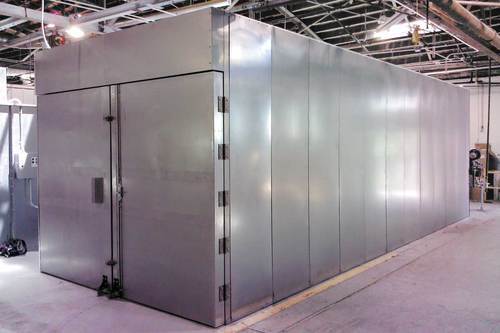
Heating a curing oven from room temperature to full operating conditions involves more than simply turning on a burner. Air movement, insulation quality, metal load weight, and even the temperature of the building all affect how quickly the chamber reaches curing temperature. Engineers who design powder coating ovens study these variables closely so powder coating systems reach production heat efficiently without wasting fuel.
Total Oven Chamber Volume and Air Mass
Oven chamber size directly influences how long powder curing ovens take to reach target temperature. A larger chamber contains more air mass, and that air must be heated before coated parts begin curing. The greater the internal volume of an industrial powder coating oven, the more energy the heating system must supply during startup. Air circulation inside large powder coating ovens also plays a role in distributing heat evenly. If airflow moves slowly or unevenly through the chamber, certain areas may warm faster than others. Engineers account for both air mass and airflow design when configuring powder coating equipment so temperature rises steadily throughout the entire chamber.
Thickness and Density of Insulation Panels
Insulation panels form the thermal barrier that keeps heat inside curing equipment. Thicker insulation slows heat loss through the oven walls, helping powder coating ovens maintain higher temperatures during operation. During warm-up, insulation quality determines how much energy escapes before the chamber stabilizes. High-density insulation materials store heat differently from lightweight insulation boards. Dense panels absorb energy slowly but release it gradually, which helps stabilize internal temperatures once the oven reaches operating range. Well-insulated powder coating systems reach curing temperature faster because less heat escapes during the startup cycle.
Burner Turndown Ratio and Firing Rate
Burner performance strongly affects how quickly powder curing ovens reach curing temperature. The firing rate determines how much heat energy enters the chamber during startup. Higher burner output raises temperatures quickly, especially in large powder coating equipment installations designed for heavy production loads. Turndown ratio also matters. A burner with a wide turndown range adjusts smoothly from high startup output to lower operating levels once the oven approaches its target temperature. Proper burner sizing within a powder coating equipment package ensures fast heating without excessive fuel consumption or temperature overshoot.
Recirculation Fan Horsepower and Airflow Rate
Recirculation fans move heated air throughout the chamber and across coated parts. Strong airflow spreads heat evenly, preventing hot and cold zones inside powder coating ovens. Fan horsepower directly influences how effectively heated air circulates through the oven during warm-up. Airflow rate also determines how quickly heat transfers to the chamber structure and internal components. If airflow remains weak or inconsistent, heat may concentrate near burners instead of reaching the entire oven interior. Designers often match fan capacity carefully to the size of the powder coating equipment so the airflow supports fast and balanced heating.
Initial Ambient Plant Temperature Conditions
Temperature inside the manufacturing facility affects oven warm-up time more than many operators realize. Cold buildings require the oven to heat both its internal air and surrounding metal structure before stable curing conditions appear. Powder coating ovens operating during winter months may take noticeably longer to reach production temperatures.
Seasonal changes influence the startup performance of powder coating systems in several ways:
- Cold air entering the oven increases heating demand
- Steel racks and conveyors begin the day at lower temperatures
- Surrounding structural metal absorbs heat from the chamber
These environmental conditions add extra thermal load during startup, extending the warm-up period before powder coating can begin.
Heat Sink Effect from Loaded Steel Parts
Large steel parts placed inside the oven absorb heat rapidly during startup. This heat sink effect slows the temperature rise because energy transfers into the metal instead of remaining in the air. Heavy components such as frames, brackets, or structural assemblies can significantly extend warm-up time. Different steel thicknesses respond differently to heating cycles. Thin parts reach curing temperature quickly, while thick metal components require more time to absorb enough energy for powder coating to melt and flow properly. Engineers designing powder coating equipment often evaluate expected part weights when determining heating capacity.
Door Seal Integrity During Startup
Oven doors represent one of the most common sources of heat loss. If door seals allow air leakage, heated air escapes during the warm-up phase and slows the temperature rise. Even small gaps around door edges can release a surprising amount of heat.
Well-designed door gaskets help maintain pressure balance inside powder coating ovens. Tight seals prevent heated air from escaping while also keeping cooler outside air from entering the chamber. Maintaining seal integrity helps powder coating equipment reach curing temperatures faster and operate more efficiently throughout the day.
Control Ramp Rate Programming Settings
Modern powder coating systems use programmable temperature controllers to regulate how quickly oven temperature increases during startup. Ramp rate programming prevents sudden temperature spikes that could damage heating elements or create uneven expansion within the oven structure.
Gradual temperature increases also help protect powder coating equipment from thermal stress. By controlling how quickly heat rises inside the chamber, operators maintain stable airflow and burner operation. Proper ramp rate programming helps powder curing ovens achieve smooth, predictable warm-up cycles.
Fuel Supply Pressure Stability
Consistent fuel pressure allows burners to maintain steady heat output during the warm-up phase. Fluctuations in gas supply pressure can cause burner output to vary, slowing the temperature rise inside powder coating ovens. Stable fuel delivery ensures burners operate at the firing rate required for startup.
Facilities installing a powder coating oven for sale often evaluate their gas supply capacity before equipment arrives. Adequate pressure and flow rate support reliable burner operation and prevent delays in reaching curing temperature. Fuel supply stability becomes especially important in large industrial powder coating oven installations that operate continuously throughout production shifts. Complete powder coating equipment packages may include custom powder curing ovens designed to achieve faster warm-up times while maintaining consistent curing conditions. Experienced specialists such as Reliant Finishing Systems provide system layouts and technical guidance that help manufacturers run efficient powder coating operations with dependable heating performance.